Photography challenges are the single fastest way to break out of a creative rut and actually improve, because they force you to make decisions instead of waiting around for inspiration to show up. Whether you picked up a camera last week or you’ve been shooting professionally for a decade, a structured set of prompts gives you a reason to pick up your gear every day. This guide walks through why photography challenges work, how to run one without burning out, and gives you 30-plus concrete prompts to try today.
You’ll get beginner-friendly ideas that use nothing but a phone and a walk around the block, plus advanced assignments that push technical skill and storytelling. We’ll also cover genre-specific challenges for portraits, street, and nature photography, and how to turn a 30-day photo challenge into a habit that outlasts the month.
By the end, you’ll have a list you can start using immediately, plus a system for tracking progress so the work actually turns into a stronger portfolio instead of a folder of random files.
Why Photography Challenges Are the Fastest Way to Grow
Most photographers stall out not because they lack talent, but because they run out of ideas. Photography challenges solve that problem by removing the “what should I shoot today” question entirely. You’re handed a prompt, a deadline, and sometimes a limitation, and your only job is to figure out how to make it work.
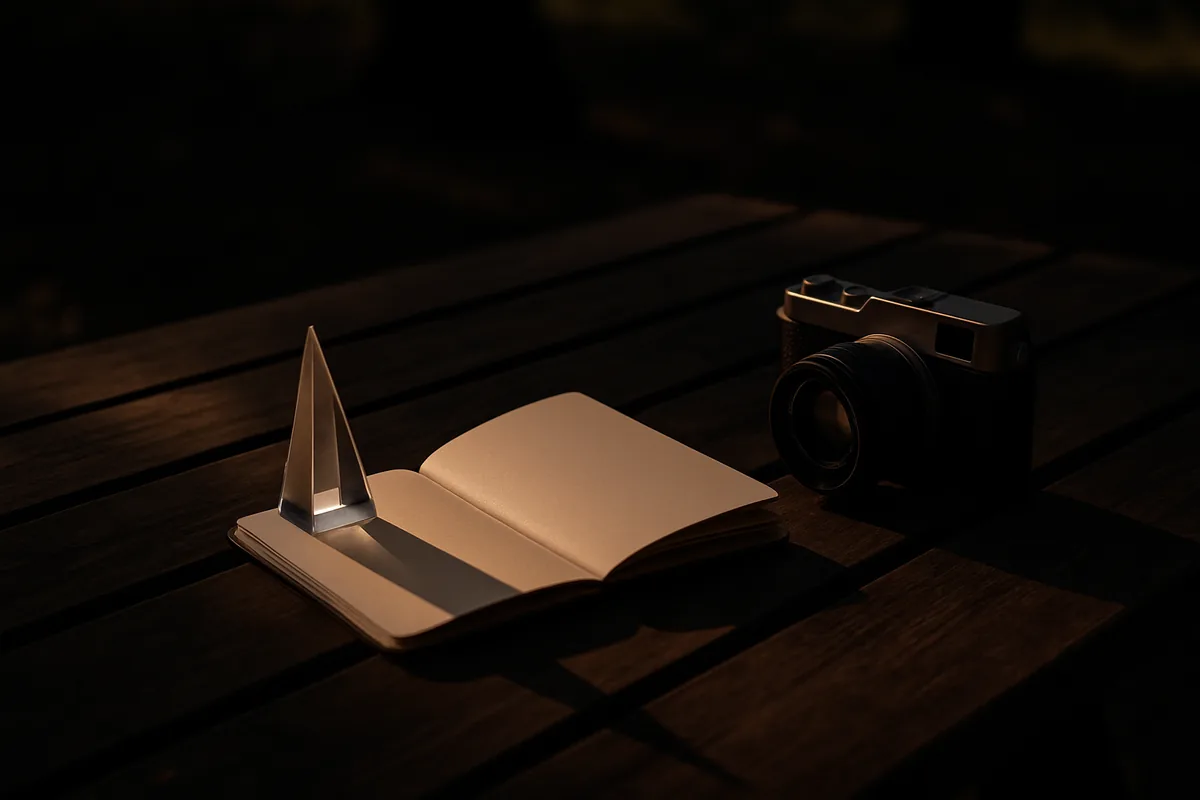
That limitation is the secret ingredient. Constraints don’t kill creativity — they focus it. Give someone unlimited freedom and they freeze; give them one lens, one hour, and one subject, and they start solving problems fast.
How constraints boost creative thinking
Psychologists who study creativity have long noted that too many options can lead to decision paralysis, while a tight set of rules pushes people toward more original solutions. Photography challenges apply that same logic. When you can only shoot in black and white for a week, you stop relying on color to carry the image and start paying attention to shape, contrast, and light instead.
This is exactly why daily shooting projects, like the long-running 365 Project community, keep producing photographers who develop a recognizable style faster than people who shoot occasionally. Chase Jarvis has talked openly about how a consistent shooting habit — not waiting for the “right” gig — is what separates working photographers from hobbyists stuck in the same rut for years. The camera in your pocket, used daily, beats the dream camera used twice a month.
What a 30-day photo challenge can do for your portfolio
A 30-day photo challenge compresses a year’s worth of trial and error into one month. You’ll shoot in bad light, in good light, indoors, outdoors, with people, without people — and by day 30 you’ll have a body of work that shows range instead of one lucky shot.
Here’s what typically happens over the course of a month-long challenge:
- Week 1: You lean on techniques you already know and results feel inconsistent.
- Week 2: You start noticing patterns in what’s working and what isn’t.
- Week 3: You begin experimenting on purpose instead of by accident.
- Week 4: You have a small, cohesive set of images you’d actually want to show someone.
If you’re building a portfolio for freelance work or just want an Instagram grid you’re proud of, that four-week arc is more useful than months of sporadic shooting. For more ideas on making everyday scenes feel intentional, check out how to make ordinary subjects look interesting in photos.
How to Get the Most Out of Any Photography Challenge
Photography challenges only work if you actually finish them, and most people quit within the first two weeks. A little planning up front makes the difference between a challenge that fizzles and one that changes how you shoot.
Start by picking a fixed time of day to shoot — lunch break, golden hour, right after your morning coffee. Consistency beats intensity here. Ten minutes daily produces better results than a rushed three-hour session once a week.
Setting realistic goals for beginners vs. pros
Beginners should aim for completion, not perfection. If you’re new to photography, the goal of a 30-day photo challenge is simply to finish 30 prompts, even if half of them are rough. Pros should raise the bar by adding a technical constraint on top of the daily prompt — shoot only in manual mode, or only with one prime lens.
| Experience Level | Daily Goal | Added Constraint |
|---|---|---|
| Beginner | One finished photo per day | Use only your phone or kit lens |
| Intermediate | One edited photo + short caption | Shoot in manual mode only |
| Advanced/Pro | A themed mini-series each week | Single lens, single location, or single light source |
Tools and gear you already own that are enough
You don’t need new gear to start photography challenges. A smartphone or an entry-level camera like the Canon EOS R50 (around $679 body-only) is more than capable of every prompt in this article. What matters more is limiting your gear on purpose — pick one lens for the week and leave the rest at home.
Accountability matters as much as equipment. Post your daily shot to Instagram with a consistent hashtag, join a local camera club, or find a Discord group built around daily challenges. Public commitment is one of the most reliable ways to actually finish what you started. If you’re shooting mostly on a phone, these guides can round out your technical skills: Smartphone Photography: A Beginner’s Guide and How to Get Sharper Photos With Your Phone.
15 Photography Challenges for Beginners
These photography challenges assume nothing fancy — just a camera, some curiosity, and a willingness to look at ordinary things differently. Work through them in any order, or string them together into your own 15-day challenge.
Everyday object challenges
- Photograph the same coffee mug at five different times of day to study how light changes it.
- Shoot only kitchen items for a full afternoon — spoons, salt shakers, a cutting board.
- Photograph something red, then something round, then something rusty, back to back.
- Find one object in your home and shoot it from ten completely different angles.
- Photograph a single flower or plant every day for a week and track how it changes.
Light and shadow challenges
- Shoot only in black and white for seven straight days.
- Photograph shadows cast through a window blind or fence at midday.
- Capture a subject lit only by a single lamp in a dark room.
- Photograph the same street corner at sunrise, noon, and sunset.
- Shoot through a glass prism or wine glass to bend and warp light on purpose.
Composition-based challenges
- Walk your neighborhood and find five leading lines you’ve never noticed before.
- Photograph reflections in puddles, windows, or a stainless steel toaster.
- Fill the entire frame with texture — bark, brick, fabric, nothing else.
- Shoot the same subject using the rule of thirds, then centered, and compare.
- Find a doorway, window, or archway and use it to frame a distant subject.
For more reflection and shadow-specific ideas, these two guides go deeper: Reflection Photography: Creative Ideas and Techniques and Shadow Photography: 10 Creative Ideas to Try. If you’re ever stuck without an obvious subject, 10 Photography Ideas When You Have Nothing to Photograph is worth bookmarking.
15 Advanced Photography Challenges for Skill Building
Once the basics feel automatic, these photography challenges push you toward technical precision and real storytelling. They take longer to complete and reward patience over speed.
Technical mastery challenges
- Shoot an entire day using manual focus only — no autofocus assist at all.
- Create a long-exposure light painting using a flashlight in a completely dark room.
- Photograph a moving subject three ways: frozen, motion-blurred, and panned.
- Shoot a full roll (or 36 digital frames) using only one focal length, no zoom.
- Recreate the warm, side-lit portrait style seen in Steve McCurry’s “Afghan Girl” using a single window as your light source.
Storytelling and project-based challenges
- Tell a complete story of someone’s morning routine in exactly 10 frames.
- Shoot a self-portrait series once a week for a full month, same location, changing light.
- Document one local business from opening to closing in a single day.
- Build a photo essay around a color you rarely photograph, like yellow or teal.
- Photograph the same person once a year for five years and start this year.
- Create a diptych — two images side by side that comment on each other.
- Shoot a “before and after” story of a space being cleaned, built, or renovated.
- Photograph strangers’ hands and the objects they’re holding across one day.
- Build a five-image series that only uses natural light and no editing beyond basic crop.
- Photograph the same subject in four seasons if your schedule allows it, or simulate it across four different weeks.
Want more inspiration around light and color as a storytelling tool? Creative Photography Techniques Using Light and Color and Abstract Photography: Simple Techniques for Beginners both break down techniques you can fold directly into these prompts.
Photography Challenges by Genre: Portrait, Street, and Nature
Not every photographer wants the same kind of photography challenges. If you already know which genre excites you, these targeted prompts will feel more relevant than a generic list.
Portrait photography challenge ideas
- Photograph three different friends using only one softbox or one window, keeping your setup identical each time.
- Shoot a portrait series where every subject is caught mid-laugh, not posed.
- Ask a stranger at a local coffee shop for a quick portrait and one sentence about their day.
If phone portraits are more your speed, Phone Portrait Photography: 12 Tips for Better Results covers settings and posing that translate directly to these challenges.
Street photography challenge ideas
- Spend one hour at a busy intersection and only photograph people crossing.
- Visit a local farmers market and shoot candid interactions between vendors and customers.
- Photograph the contrast between old and new architecture on the same city block.
For candid work specifically, Candid Travel Photography: Capturing Authentic Moments and City Photography: How to Capture Buildings and Streets pair well with this genre’s challenges.
Nature and macro photography challenge ideas
- Visit a botanical garden and shoot ten different textures found on leaves, bark, or petals.
- Photograph water in three states in one outing: still, flowing, and splashing.
- Spend a morning photographing insects or dew on grass before 8 a.m., while light is still soft.
Water-based subjects have their own learning curve — Water Photography: Creative Techniques for Beginners and Waterfall Photography: Tips for Capturing Moving Water both cover shutter speed settings that matter for this list.
How to Turn a 30-Day Photo Challenge Into a Lasting Habit
The real value of photography challenges shows up after day 30, once the structure disappears and you have to decide whether to keep going on your own. Most people who quit do so because they never built a system for tracking progress in the first place.
Tracking progress and building a portfolio
Keep it simple. A basic spreadsheet with columns for date, prompt, camera settings, and a one-line note works fine — you don’t need special software. If you already edit in Lightroom, create a dedicated collection for your challenge and star your top pick from each week.
At the end of the month, review the whole set side by side. You’ll usually find one or two images strong enough to anchor a portfolio page, and a handful of settings or techniques you now use without thinking about it.
Joining online photography challenge communities
Community keeps momentum going long after personal motivation fades. Communities like r/photography and 365project.org run ongoing challenges with feedback from thousands of photographers, which gives you outside perspective you won’t get shooting alone. The Smithsonian and other institutions also run periodic public photography contests worth tracking for extra prompts and deadlines.
Set a recurring calendar reminder to check in with your chosen community weekly. That small habit is often what separates people who do one 30-day photo challenge from people who do four a year.
Common Mistakes to Avoid During Photography Challenges
Photography challenges fail for predictable reasons, and almost all of them are avoidable once you know what to watch for.
Chasing perfection over consistency
The point of a daily challenge is repetition, not a gallery-ready shot every single day. If you skip a day because nothing feels “good enough,” you break the habit you’re trying to build. Shoot something mediocre and move on — day 15 will always beat day 1.
Skipping review and editing
Shooting without reviewing is like practicing scales without ever listening back. Set aside 15 minutes once a week to look at everything you’ve captured and ask what’s actually working. Comparing your work to strangers online is far less useful than comparing your week 4 photos to your week 1 photos.
- Mistake: Quitting after missing one day — instead, just pick back up the next day.
- Mistake: Comparing raw output to other people’s edited, curated feeds.
- Mistake: Never revisiting old shots to spot patterns and repeated errors.
For a broader reference on photographic technique and history, the Library of Congress maintains extensive public photography archives worth studying for composition and light.
Pick Your First Photography Challenge Today
You don’t need a perfect plan to start — you need one prompt and a camera you already own. Pick a single item from this list, set a daily reminder, and commit to finishing it before adding a second one. Photography challenges work because they replace hesitation with action, one frame at a time.
Start small: choose three prompts from the beginner section, shoot them this week, and review the results side by side on Sunday. That short cycle of shoot, review, adjust is the entire engine behind every photographer who’s used daily challenges to build a stronger, more consistent body of work.
Frequently Asked Questions
What are good photography challenges for beginners?
Start simple: shoot the same object at different times of day, try a week of black-and-white-only photos, or capture five different textures around your house. These build observation skills without needing new gear.
How long should a photography challenge last?
Most people find 30 days is the sweet spot—long enough to build a real habit but short enough to stay motivated. You can also try shorter 7-day themed challenges if 30 days feels overwhelming.
Do I need a professional camera to do photography challenges?
No. A smartphone or an entry-level camera like the Canon EOS R50 or Nikon Z30 is more than enough. Challenges are about creative thinking, not equipment.
How do I stay motivated during a 30-day photo challenge?
Share your daily shots on Instagram or with a small accountability group, set a fixed time each day to shoot, and focus on progress rather than getting a perfect photo every single day.
Where can I find daily photography challenge prompts?
Communities like 365project.org, r/PhotographyChallenges on Reddit, and hashtags like #photoaday on Instagram offer ongoing prompts and a supportive audience to share your work with.
Can photography challenges help me find my personal style?
Yes. Shooting daily under different constraints forces you to make quick creative decisions, and patterns in your favorite results often reveal the subjects, colors, or moods that define your style.

Mark Finley is a professional photographer, educator, and the founder of FormLovers. With years of experience behind the lens, Mark has transitioned from a passionate hobbyist to an industry professional, capturing stunning visuals and mastering the business of photography.