Photography projects work best when you give yourself a deadline, and a weekend is the perfect amount of time to finish one without losing momentum. In this guide, you’ll get 20 specific, doable photography projects you can start Saturday morning and wrap up by Sunday night. Each one is designed to teach a real skill — exposure, composition, storytelling, or creative seeing — rather than just filling your camera roll.
You’ll also get a simple system for turning these one-off weekends into a habit, plus gear notes for people shooting on a smartphone, an entry-level DSLR, or something in between. None of this requires expensive equipment. Most of these photography projects can be done with a camera you already own and a couple of hours of free time.
Whether you’re brand new to photography or you’ve been shooting for years and feel stuck, this list is built to shake up your routine. Let’s get into why short, focused photography projects actually work better than random shooting.
Why Weekend Photography Projects Matter
Most people improve slower than they should because they shoot without a plan. You grab your camera when something looks nice, take a few frames, and move on. Photography projects flip that around: you decide on a specific goal before you pick up the camera, which forces you to think instead of just react.
Professional photographers rely on this structure constantly. Photographers associated with agencies like Magnum Photos often spend months or years on a single personal project — documenting one neighborhood, one subject, one theme — because narrowing the focus is what produces a distinctive body of work. You don’t need months. A weekend is enough to feel that same kind of focused practice.
How Short-Term Projects Build Long-Term Skills
Here’s a real comparison. Say you take your camera on random outings over a month and end up with maybe 200 images scattered across different subjects, lighting conditions, and settings. Compare that to someone who commits to one Saturday morning walk and shoots 50 frames with a single goal — say, capturing reflections in puddles and windows.
The second photographer learns faster because every frame is solving the same problem. By frame 30, they’re anticipating good reflection spots before they even raise the camera. That’s the compounding value of photography projects: repetition with intention beats volume without direction.
What Makes a Project Realistic in Two Days
A good weekend project has three things: a narrow subject, a fixed time box, and a visible finish line. If your goal is vague — “get better at portraits” — you’ll wander. If your goal is “shoot five environmental portraits of neighbors by Sunday at 5 p.m.,” you have something you can actually execute and evaluate.
Keep the scope small enough to finish. That’s the whole point of weekend photography ideas — they respect your limited time while still pushing your skills forward.
Photography Projects for Beginners
If you’re new to photography, these photography projects for beginners are built around fundamentals: exposure, white balance, and composition. You can use a smartphone for most of these, or an entry-level camera like a Canon EOS Rebel T7, which runs around $400 and is a common first DSLR.
Master Manual Mode in a Day
Switch your camera to manual mode for one full day and don’t touch auto again. Shoot the same scene at three different apertures, then three different shutter speeds, and compare the results side by side. This project teaches the exposure triangle faster than any tutorial because you see the trade-offs firsthand.
Shoot the Same Object at Different Times of Day
Pick one static object — a mailbox, a tree, a parked bike — and photograph it every two hours from sunrise to sunset. This teaches you how light temperature and direction change a scene dramatically even when nothing else moves. It’s one of the simplest photography challenges for beginners because the subject never changes, only the light does.
Build a Simple Home Studio Setup
Use a window, a white poster board as a reflector, and a small object like a coffee mug or a houseplant. Practice controlling shadows by moving the poster board closer and farther from the subject. This is a low-cost way to learn light control before you invest in studio gear.
- White balance project: Photograph the same white shirt under sunlight, shade, and indoor tungsten bulbs, then compare colors in-camera and after editing.
- Composition scavenger hunt: Spend an hour finding five examples of the rule of thirds in everyday scenes — a park bench, a storefront, a street corner.
- One lens, one hour: If you own more than one lens, pick just one and force yourself to compose creatively without switching.
For more structured beginner exercises, the 10 Photography Exercises to Improve Your Skills guide pairs well with this list, and the 30-Day Photography Challenge for Beginners is a good next step once you’ve done a few weekend projects.
Creative Photography Projects to Break Your Routine
Once the technical basics feel comfortable, these photography projects shift the focus to creative seeing — color, shadow, and reflection instead of settings. They work well in ordinary places: a downtown block, a local park, or even your own kitchen counter.
The Color Study Project
Pick one color — red, yellow, teal — and spend a weekend photographing only subjects that contain that color prominently. A downtown area with painted storefronts, food trucks, and street art usually gives you plenty of material in under two hours. This project sharpens your eye for how color creates mood and visual rhythm in a frame.
Shadows and Silhouettes Weekend
Shoot exclusively during the two hours around sunrise or sunset when shadows stretch long and contrast is high. Look for shadows cast through fences, tree branches, or window blinds, and try silhouetting people against bright skies. This is one of the more dramatic creative photography exercises because it teaches you to expose for highlights and let shadow areas go dark on purpose.
Reflections in Unexpected Places
Puddles after rain, storefront windows, car hoods, and even spoons or sunglasses all create reflective surfaces worth photographing. Spend a Saturday morning walking your neighborhood specifically hunting for reflections rather than obvious scenery. It trains you to notice surfaces most people walk past without a second look.
If this direction interests you, the Shadow Photography: 10 Creative Ideas to Try and Reflection Photography: Creative Ideas and Techniques articles go deeper into technique. The Color in Photography guide is also worth reading before your color study weekend.
Portrait and People-Focused Photography Projects
People photography intimidates a lot of beginners, but it’s one of the fastest ways to grow because you’re forced to communicate, direct, and read light on a moving subject. These photography projects work whether you’re shooting friends, neighbors, or strangers who agree to a few minutes of their time.
A Portrait Series of Strangers or Friends
Set a goal of five portraits over the weekend, either of friends or people you approach in public. Always ask permission first and explain briefly what you’re doing — most people say yes when you’re upfront and quick. Use natural window light or a simple $70 reflector to bounce light back into the face and soften harsh shadows.
Documenting a Local Small Business Owner
Reach out to a local shop owner — a bakery, a barbershop, a bookstore — and ask to spend an hour photographing them at work. Shoot a mix of wide environmental shots that show their space and closer portraits that show their expression and hands. This combination teaches you to tell a story about a person through their surroundings, not just their face.
| Project | Gear Needed | Skill Practiced |
|---|---|---|
| Stranger portrait series | Camera or smartphone, optional reflector | Direction, consent, natural light |
| Small business documentary | One versatile lens (24-70mm equivalent) | Environmental storytelling |
| Home studio portraits | Window light, white poster board | Light shaping and shadow control |
Documentary and Storytelling Photography Projects
Documentary-style photography projects build narrative thinking — you’re not just capturing a moment, you’re arranging a sequence of moments that tell a story with a beginning, middle, and end. This is one of the best photography assignments for anyone who wants to eventually shoot travel, journalism, or personal essays.
A Day in the Life Project
Pick a subject — yourself, a family member, or a local farmers market — and photograph it from the moment it opens to the moment it closes. A farmers market works especially well because it has a natural arc: setup in early morning light, the midday rush, and the quiet teardown in the afternoon. Aim for at least 40 usable frames that could be edited down to a 10-image story.
Photographing Your Neighborhood’s Changes
If there’s construction, a seasonal change, or a business turnover happening near you, photograph the same spot every weekend for a month from the same angle. This turns into a long-term photography project built from small weekend sessions, and it’s a great way to practice consistency and patience. The comparison images at the end are often more compelling than any single shot.
For more narrative-driven ideas, check out Travel Photography Storytelling: How to Create a Photo Story and Photo Series Ideas: How to Create a Cohesive Collection, both of which apply directly to documentary-style photography projects.
Technical Photography Projects to Sharpen Your Skills
These photography projects push you toward more demanding techniques: long exposures, macro work, and motion. They require a little more gear, but nothing that breaks the budget.
Long Exposure Water or Traffic Trails
Find moving water — a fountain, a creek, or a small waterfall — or a busy street at dusk with car headlights and taillights. Use a tripod and, for daytime shots, a neutral density filter like the Hoya NDx400, which runs around $60 and lets you extend exposure times even in bright light. Start around 1-2 seconds for water and 10-15 seconds for traffic trails, then adjust based on results.
Macro Photography with a Budget Lens
You don’t need a dedicated macro lens to start. A set of extension tubes, often priced around $150, attaches between your camera body and existing lens to let you focus much closer than normal. Spend a weekend photographing textures around the house — coffee grounds, fabric weave, water droplets on a leaf — to learn how shallow depth of field behaves at close range.
- Panning for motion blur: Photograph cyclists or cars while tracking them with your camera at a slow shutter speed like 1/30s to blur the background while keeping the subject relatively sharp.
- Star trails or night sky: Set up a tripod in a dark area and shoot a sequence of 20-30 second exposures to stack later, or try a single long exposure if your camera allows it.
- Abstract close-ups: Focus on patterns, curves, and textures rather than recognizable objects to train your eye for shape and form over subject matter.
The Abstract Photography: Simple Techniques for Beginners guide and Water Photography: Creative Techniques for Beginners both expand on these technical photography projects with more detail on settings and composition.
How to Turn Weekend Photography Projects into a Habit
The biggest reason people stop doing photography projects isn’t lack of ideas — it’s lack of structure. A simple weekly system keeps you consistent without burning you out.
Setting a Simple Shot List Before You Go
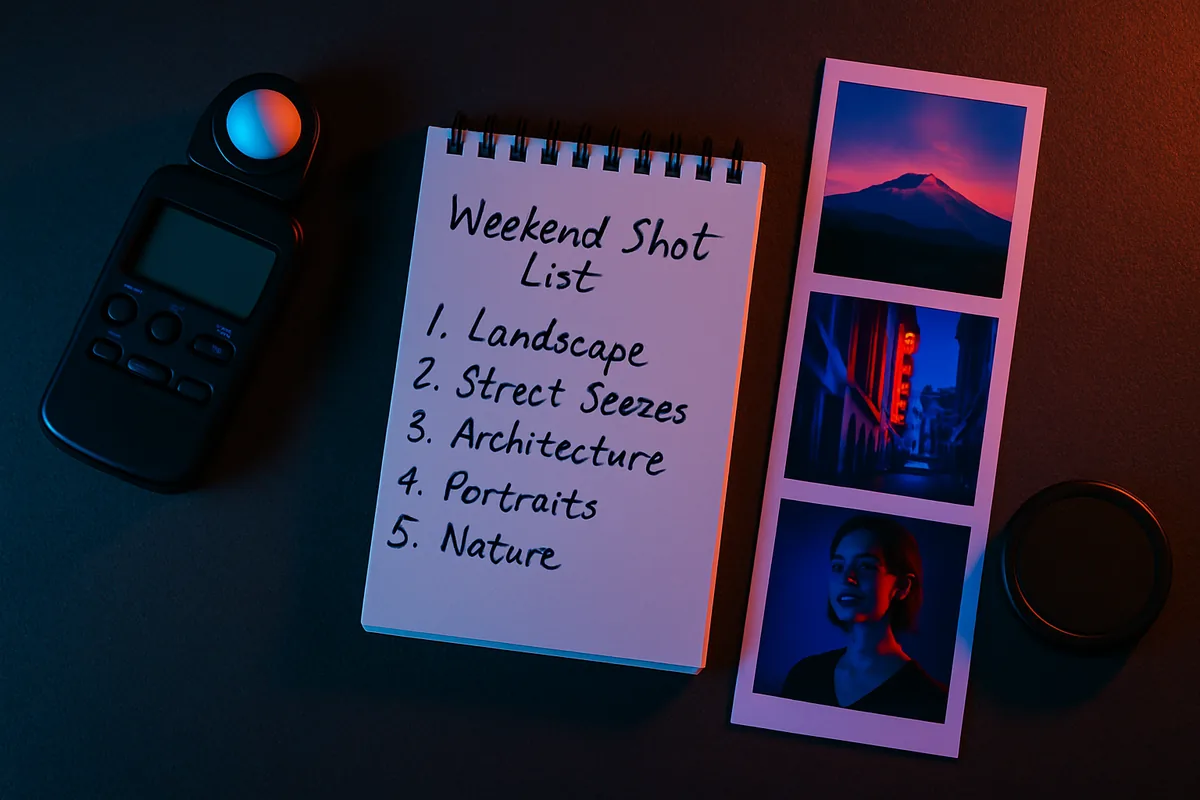
Before you leave the house, write down three to five specific shots you want to attempt. This isn’t a rigid script, just a starting point that prevents the “I don’t know what to shoot” freeze once you’re standing outside. A shot list turns an open-ended weekend into a focused mini-assignment.
Reviewing and Editing Your Work on Sunday Night
Set aside 30-45 minutes every Sunday evening to review your images and do a light edit pass, whether in Lightroom, Snapseed, or your phone’s built-in editor. Pick your single best image from the weekend and share it publicly — a photography forum, Instagram, or even a group chat with other photographers. Public accountability is one of the simplest ways to keep a personal project going past the first few weeks.
Keep a basic log, even a notes app list, of which project you did each weekend and one thing you learned. Over a few months, this record becomes its own kind of photography project — a visible map of how your eye and technical skills have changed. For a longer-term structure once weekends become routine, the 365 Photography Project: A Beginner’s Guide and Personal Photography Projects: Ideas for Beginners are natural next steps.
You can learn more about the history and technical foundations of the medium through resources like the Wikipedia entry on photography, and see how professional long-term projects are structured through Magnum Photos‘ archive of documentary work.
Pick One Project This Weekend
You don’t need all 20 photography projects at once — pick the one that scares or excites you the most and commit to it this Saturday. Write your shot list Friday night, shoot Saturday morning while the light is good, and edit Sunday evening while it’s still fresh in your mind. That single cycle, repeated most weekends, will teach you more about your camera and your creative eye than months of shooting without a plan.
Frequently Asked Questions
What are good photography projects for beginners?
Good beginner projects include shooting only in manual mode for a full day, photographing the same object in different lighting, or doing a 10-shot color study around your house. These teach exposure, composition, and light without needing expensive gear.
How do I come up with photography project ideas?
Start with a limitation, like one lens, one subject, or one hour, and build a small shot list around it. Looking at your own daily routine, neighborhood, or a recurring subject like your pet or morning coffee is usually enough to find a full weekend of material.
Can I do photography projects with just a smartphone?
Yes, most of the projects on this list, like shadow studies, reflections, or a day-in-the-life series, work perfectly well with a smartphone camera. The skills you build around composition and light apply to any camera you eventually upgrade to.
How long should a weekend photography project take?
Most projects here are designed to fit into 2 to 4 hours of shooting plus about an hour of editing, so you can finish comfortably within a Saturday or Sunday. Longer documentary-style projects can stretch across both days if you want more depth.
How many photos should I take for a personal photography project?
Aim to shoot 50 to 100 frames and edit down to your 5 to 10 strongest images, since this forces you to be selective and think about editing as part of the creative process. Quality over quantity matters more than hitting an exact number.
Mark Finley is a professional photographer, educator, and the founder of FormLovers. With years of experience behind the lens, Mark has transitioned from a passionate hobbyist to an industry professional, capturing stunning visuals and mastering the business of photography.