Photography project ideas are the fastest way to break out of a creative rut and actually see improvement in your work month over month. Whether you shoot on a phone or a full-frame mirrorless camera, a structured project gives you a reason to pick up your gear even on days when inspiration is low. This guide walks through 52 project options — one for every week of the year — organized by skill level and genre, plus tips on how to pick the right one and actually stick with it.
You’ll find beginner-friendly assignments, portrait and street challenges, nature and landscape ideas, and conceptual projects built around editing and post-processing. Each section includes real examples you can start this week, not vague suggestions. By the end, you’ll have a full year of photography project ideas mapped out and a plan for how to track your progress without burning out by February.
Why Photography Project Ideas Matter for Growth
Random shooting teaches you almost nothing because there’s no feedback loop. You take a photo, move on, and never compare it against a previous attempt at the same problem. Structured photography project ideas force repetition, and repetition is how skills like exposure control, composition, and editing actually stick.
Think about the 365 photo project, an approach popularized by photographers including Chase Jarvis, who built an entire creative philosophy around the phrase “the best camera is the one that’s with you.” Shooting daily for a year doesn’t just fill a hard drive — it builds muscle memory for seeing light, framing quickly, and finishing a photo instead of abandoning it half-edited.
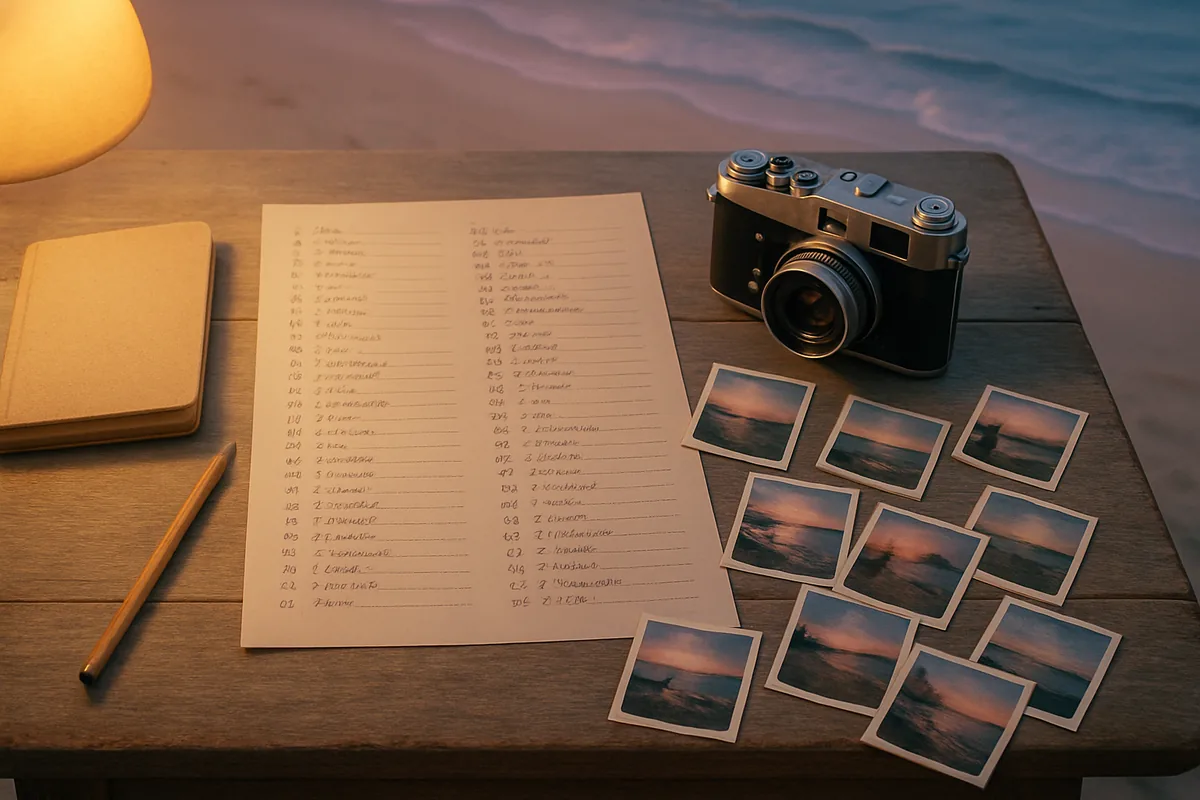
How a Weekly or Monthly Project Builds Skill Faster Than Random Shooting
A weekly project gives you seven days to think about one problem: maybe it’s shadows, maybe it’s a single lens, maybe it’s a subject you’d normally ignore. That constraint is what makes personal photography projects work. Constraints remove the paralysis of infinite choice and replace it with a clear task.
Compare that to grabbing your camera on a whim. Without a theme, most beginners default to the same three shots: a pet, a sunset, a coffee cup. A monthly photo challenge breaks that pattern because you’re accountable to a specific goal every time you shoot.
Setting Realistic Goals Before You Start
Before committing to any of these photography project ideas, decide how much time you can realistically give it. A daily project sounds impressive, but a weekly or monthly cadence is often more sustainable for someone working a full-time job.
Write your goal down somewhere visible — a sticky note on your monitor, a recurring calendar reminder, whatever works. Photographers who treat a project like an appointment finish it. Photographers who treat it like a vague intention usually quit by week three.
12 Photography Project Ideas for Beginners
These photography assignments for beginners focus on fundamentals: light, composition, and gear limitations. None require expensive equipment, and most can be done with a kit lens or even a smartphone.
- One Lens for 30 Days — Pick a single lens, like a 50mm f/1.8 (often under $150 new for most DSLR and mirrorless mounts), and shoot exclusively with it for a month.
- Only Natural Light for 30 Days — No flash, no artificial light. Learn to read window light, golden hour, and overcast skies.
- The Alphabet Photo Challenge — Photograph an object or shape for each letter of the alphabet, one letter per day or week.
- One Subject, 12 Ways — Choose one object (a chair, a mug, a plant) and photograph it 12 different ways using angle, light, and framing changes.
- Shoot Only in Manual Mode — Force yourself off auto for two weeks to internalize the exposure triangle.
- Rule of Thirds Only — For one week, every shot must follow the rule of thirds, no centered compositions allowed.
- Leading Lines Hunt — Spend a week finding roads, fences, railings, or shadows that lead the eye into the frame.
- Texture Study — Photograph ten different textures: bark, fabric, rust, water, concrete.
- Same Object, Different Times of Day — Photograph the same tree or building at sunrise, noon, sunset, and night.
- No-Zoom Week — Use your feet instead of a zoom lens to change composition.
- One Aperture Only — Shoot everything at f/2.8 (or your widest available) for a week to understand depth of field.
- Black-and-White Only Month — Convert every shot to monochrome to train your eye on light and contrast instead of color.
One Subject, 12 Ways
This one deserves extra attention because it’s the single best exercise for composition. Pick something boring — a coffee mug on your kitchen table — and force yourself to make it interesting from 12 angles: low, high, backlit, side-lit, macro, wide, with a shallow depth of field, with reflections. You’ll walk away understanding composition faster than a month of casual shooting.
The Alphabet Photo Challenge
This is a favorite among photography students because it never runs out of material. A is for “arch,” B is for “bicycle,” and so on. It’s flexible enough to work in a city, a suburb, or the countryside, and it naturally pushes you to notice things you’d normally walk past.
A Month of Only Natural Light
Turn off your flash and put away any continuous LED panels. For 30 days, everything you shoot has to work with whatever light is available — window light indoors, open shade outdoors, or golden hour in the evening. If you want a deeper dive on window and daylight technique, our guide on natural light photography with your phone applies just as well to any camera.
13 Creative Photography Challenges for Portrait and Street Work
People photography is intimidating for a lot of beginners, which is exactly why it belongs on this list of photography project ideas. These creative photography challenges build confidence in approaching strangers, directing subjects, and capturing candid moments.
- Strangers Project: One Portrait a Week — Ask one stranger a week for a five-minute portrait.
- Reflections in Shop Windows — Photograph people and storefronts reflected in glass.
- Candid Commuter Moments — Capture unposed moments on public transit or at bus stops (always be respectful of privacy and local laws).
- Self-Portrait Project: 52 Weeks — One self-portrait a week, exploring mood, light, and setting.
- Hands Only — A week of portraits focused only on hands: working, holding, gesturing.
- Same Friend, Four Seasons — Photograph the same willing subject once per season.
- Street Corner Study — Return to the same street corner weekly for a month at different times of day.
- Silhouettes Against Bright Backgrounds — A week dedicated to backlit silhouette portraits.
- Occupation Portraits — Photograph people in their workplace: a baker, a mechanic, a barista.
- Emotion in One Word — Assign a different emotion each week and try to capture it in a portrait.
- Market Day Candids — Spend a Saturday at a farmers market shooting only candid interactions.
- Environmental Portrait Series — Ten portraits where the background tells as much of the story as the face.
- Group of Strangers, One Photo — Once a month, capture a candid moment involving three or more strangers interacting.
Strangers Project: One Portrait a Week
Brandon Stanton built Humans of New York around exactly this idea, approaching strangers on the street and asking for a portrait plus a short story. You don’t need his audience to benefit from the exercise — committing to one stranger a week trains you to approach people, get consent, and make them comfortable in front of a lens fast.
Reflections in Shop Windows
Downtown storefronts double as free studio lighting and free compositional layering. Look for glass that reflects the street while also showing what’s inside the shop. If you want technique-specific guidance, check our post on reflection photography ideas and techniques for framing tips that apply directly here.
Candid Commuter Moments
Trains, buses, and subway platforms are full of unguarded moments — someone reading, someone half-asleep, someone laughing at their phone. Shoot from the hip or use a longer lens to stay unobtrusive, and always be mindful of local photography etiquette in transit systems.
13 Photography Project Ideas for Landscape and Nature Lovers
Nature doesn’t hold still for a portrait session, which makes it perfect for long-term photography project ideas that unfold over weeks or seasons.
- Same Location, Four Seasons — Return to one spot once per season for a full year.
- Golden Hour Only for 30 Days — Shoot exclusively in the hour after sunrise or before sunset.
- Macro World in Your Backyard — Use a $30–$50 macro extension tube kit to photograph insects, dew, and leaf detail.
- Cloud Study — One sky photo a day for two weeks, noting how weather changes composition.
- Water in Motion — A week focused on rivers, waterfalls, or ocean waves using different shutter speeds.
- Moonrise Series — Photograph the moon rising over the same skyline once a month.
- Forest Floor Details — Ten close-up shots of moss, fungi, and fallen leaves.
- Weather Extremes — Shoot fog, rain, and bright sun at the same location.
- Backyard Bird Project — Document every bird species that visits your yard over a season.
- Minimalist Landscapes — A month of landscapes with only one or two dominant elements.
- Blue Hour Cityscape — Photograph a skyline during the 20 minutes after sunset for a month.
- National or State Park Series — Visit the same park in four different months to document change.
- Sunrise vs. Sunset Comparison — Shoot the same location at both times and compare the light quality.
Same Location, Four Seasons
Pick a tree, a park bench, or a bridge and photograph it once a month. By December, you’ll have a visual record of seasonal change and a much better sense of how light angle shifts throughout the year — something the National Weather Service’s seasonal data can help you plan around if you want to time golden hour precisely.
Golden Hour Only for 30 Days
This is one of the most popular monthly photo challenge formats because the results are almost always dramatic. For 30 days, only shoot in the hour after sunrise or the hour before sunset. If you want camera settings specific to that window, our sunset photography tips guide covers exposure and white balance in detail.
Macro World in Your Backyard
You don’t need a $600 dedicated macro lens to start. A set of extension tubes, usually $30 to $50, turns your existing lens into a close-focusing tool good enough for backyard insects, water droplets, and flower detail. Spend a week just on ants and another on dew-covered spiderwebs at sunrise.
14 Photography Project Ideas for Conceptual and Editing-Focused Growth
Not every project needs a new location. Some of the best photography project ideas happen entirely in post-processing or in how you think about a concept before you even lift the camera.
- Before-and-After Editing Series — Document your edit process on ten photos, showing raw file next to final export.
- One Color a Week — Build a series around a single dominant color: red one week, blue the next.
- Recreate a Famous Photograph — Study and recreate an iconic image, like Ansel Adams’ “Half Dome, Blowing Snow,” to learn about light and composition choices.
- Abstract Object Study — Photograph everyday objects so close or so cropped they become unrecognizable.
- Shadow-Only Series — A week dedicated to photographing shadows instead of the objects casting them.
- Double Exposure Practice — Try in-camera or edited double exposures on ten frames.
- Negative Space Project — Ten images where empty space takes up most of the frame.
- Editing Style Consistency Challenge — Edit ten unrelated photos in one consistent color grade.
- Black-and-White Conversion Study — Convert the same color photo five different ways and compare contrast choices.
- Story in Five Frames — Tell a complete short story using exactly five photographs.
- Everyday Object Reinvention — Make one mundane household object look unrecognizable through light and angle.
- Split Toning Practice — Apply warm highlights and cool shadows across a set of ten portraits.
- Free vs. Paid Editor Comparison — Edit the same photo in Lightroom and in a free tool like Darktable to compare workflow.
- Concept Word Series — Pick an abstract word like “isolation” or “growth” and interpret it visually over five images.
Before-and-After Editing Series
This project builds editing skill fast because it forces you to articulate what you changed and why. Use Lightroom, or a free alternative like Darktable if you’re not ready to pay for software, and keep a simple note of your adjustments for each image. Our photo editing for beginners guide is a good companion for this one.
One Color a Week
Color theory clicks faster when you’re forced to hunt for it. Spend a week only photographing red objects, then a week on blue, and so on. For a deeper breakdown of how color choices affect mood and composition, see our article on how color creates more powerful images.
Recreate a Famous Photograph
Studying a master’s work by trying to recreate it teaches you more than reading about technique. Ansel Adams’ Half Dome images, widely documented by the National Park Service and archived through institutions like the Library of Congress, are a great reference point for learning about contrast, timing, and patience in landscape work.
How to Choose the Right Photography Project Ideas for Your Goals
With 52 options above, the hardest part isn’t finding photography project ideas — it’s picking the one that actually fits your life right now. Use the table below as a quick filter.
| Your Situation | Recommended Project Type | Suggested Timeline |
|---|---|---|
| New to photography, unsure of settings | One-lens or manual-mode challenge | 30 days |
| Comfortable with basics, want portfolio pieces | Portrait or street series | Weekly for 3 months |
| Love the outdoors, limited weekly time | Same-location seasonal project | Monthly for a year |
| Strong shooter, weak editor | Editing-focused conceptual project | 2-4 weeks |
| Highly motivated, lots of free time | 365 photo project | Full year |
Match the Project to Your Skill Level
If you’re still learning exposure basics, don’t jump straight into a 365 photo project — you’ll burn out before you build the habit. Start with something contained, like our 30-day photography challenge for beginners, and graduate to longer personal photography projects once daily shooting feels natural instead of forced.
Set a Realistic Timeline: Weekly, Monthly, or Yearly
Weekly projects suit people with steady but limited free time. Monthly photo challenge formats work well if you travel or have unpredictable schedules. A full year-long commitment makes sense only if you already have a daily creative habit you can attach the project to, like a morning walk or commute.
Tips to Stay Consistent With Your Photography Project
Most people who start a structured project drop off within the first month — that’s normal, not a sign you’re bad at this. The photographers who finish are the ones who build in accountability from day one.
Track Progress With a Simple Calendar or App
Use a printed wall calendar, a Google Photos album labeled by week, or a simple spreadsheet. The tool doesn’t matter as much as the habit of checking a box after each shoot. Seeing an unbroken streak is one of the strongest motivators for finishing any of these photography project ideas.
Share Work Publicly for Accountability
Posting weekly to Instagram, a personal blog, or even a private group chat with friends creates gentle social pressure to keep going. If you miss a week, don’t restart the whole project from scratch — just pick up where you left off. Guilt kills more photography projects than bad weather ever will.
For more structured challenge formats once you finish your first project, our roundup of 30 photography challenges to spark your creativity is a solid next stop.
Your Next Shoot Starts Today
You now have 52 photography project ideas covering beginner fundamentals, portraits, landscapes, and editing skill — enough material to stay creatively busy well past a single year. Pick one project from this list, commit to a realistic timeline, and set your first shoot date on your calendar right now, not “sometime this week.”
The photographers who improve the fastest aren’t the ones with the best gear — they’re the ones who show up on schedule and finish what they start. Choose your first project, grab your camera, and begin today.
Frequently Asked Questions
What is a good photography project idea for beginners?
A great starting point is a 30-day project shooting with just one lens, like a 50mm f/1.8, which forces you to think about composition instead of relying on zoom. Another simple option is photographing the same subject, like your morning coffee, from a different angle every day for two weeks.
How long should a photography project last?
It depends on your schedule, but 30 days is a sweet spot for beginners because it's long enough to build a habit but short enough to finish. More experienced photographers often take on 52-week or full-year projects to track deeper growth.
What is the 365 photography project?
The 365 project means taking and posting one photo every single day for a full year, a practice made popular on platforms like Flickr in the mid-2000s. It's demanding but extremely effective for building technical speed and creative instincts.
Where can I find daily photography project ideas for free?
Websites like the Reddit community r/photography, Instagram hashtags such as #365project, and free prompt lists from sites like Photojojo or local camera club newsletters are all solid free sources. You can also generate your own list using this article's 52 ideas as a starting framework.
Do I need expensive gear to start a photography project?
No. Many of the best photography project ideas, like shooting shadows, reflections, or a single color each week, work perfectly well with a smartphone camera. Gear matters less than consistency and a willingness to look at ordinary things differently.
How do I stay motivated when I miss a day in my project?
Skip the guilt and just pick up where you left off instead of abandoning the whole project; missing one or two days out of 365 won't ruin the results. Many photographers who finish 365 projects openly admit to batching a few shots on busy days to stay on track.

Mark Finley is a professional photographer, educator, and the founder of FormLovers. With years of experience behind the lens, Mark has transitioned from a passionate hobbyist to an industry professional, capturing stunning visuals and mastering the business of photography.