A photo series is one of the fastest ways to grow as a photographer, because it forces you to think past the single perfect shot and start building a body of work that actually says something. Most beginners shoot randomly for months before realizing that a themed photography collection with a clear idea behind it teaches composition, editing, and storytelling all at once. This guide walks through how to find a concept, plan the shoot, keep the visuals consistent, and finish a photo series you’re proud to share.
You’ll learn how to turn a vague interest into a one-sentence concept, get a list of real photo series ideas split by skill level, and understand the technical choices — lens, aspect ratio, light — that hold a project together. We’ll also cover scheduling so the project doesn’t die after week two, plus editing and presentation options that make the final collection feel intentional rather than accidental.
What Makes a Photo Series Different From a Random Set of Photos
A folder of 200 vacation photos is not a photo series, even if every image is technically good. The difference is intention: a photo series answers one question, follows one subject, or explores one idea across multiple frames that were made to sit next to each other. Without that thread, you have a portfolio — a highlight reel of your best work across many unrelated moments.
Think about Vivian Maier’s street portraits of Chicago and New York in the 1950s and 60s. Individually, each frame is a strong candid shot. Together, they read as one long observation about anonymity, class, and city life, because Maier kept returning to the same visual language: eye-level framing, tight crops on faces, and a documentary distance from her subjects. That repetition is what makes the collection feel like one body of work instead of a stack of unrelated pictures.
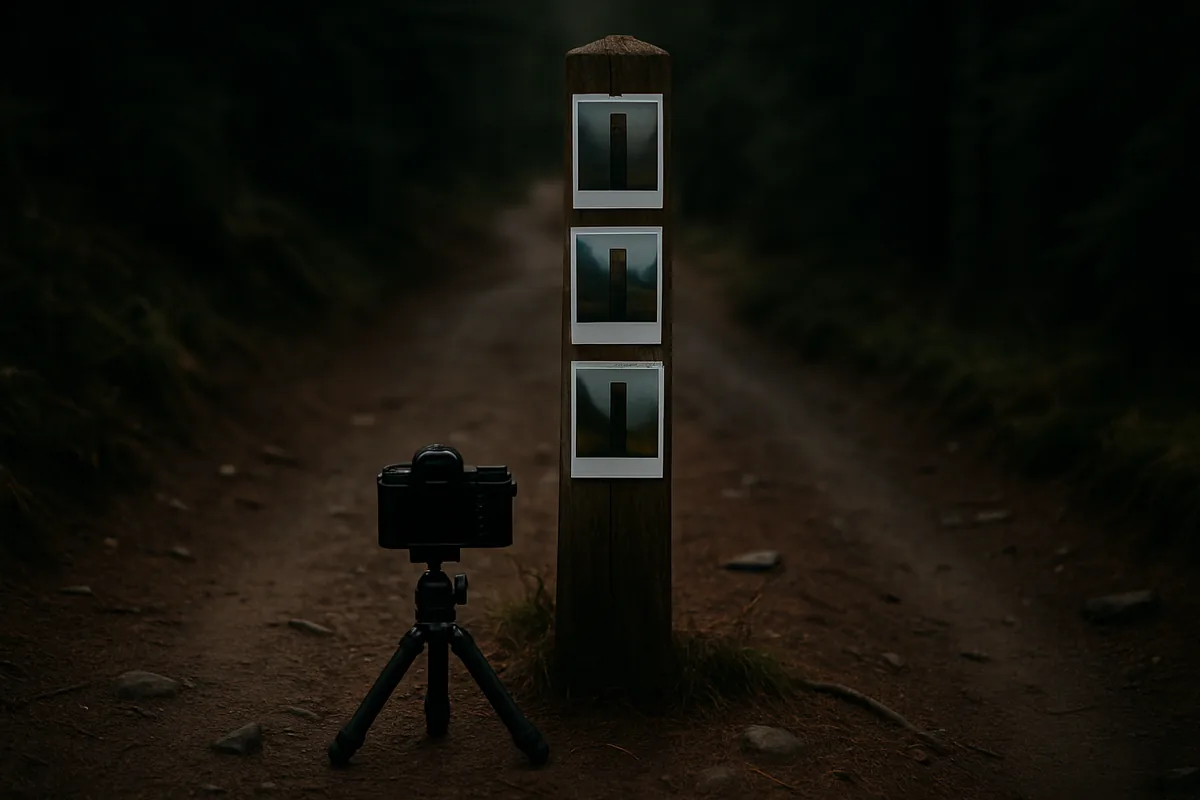
The role of a single unifying idea
Every strong photo series can be described in one sentence before a single frame is shot. “I’m photographing my dad’s hands every Sunday for a year” is a concept. “Pictures of my family” is not, because it has no edge, no boundary, and no reason to stop. The unifying idea can be a subject (one person, one object), a place (one street corner, one diner), or an emotional tone (isolation, nostalgia, joy).
Why editing choices matter as much as shooting
Cohesion doesn’t only happen in-camera. Two photographers can shoot the exact same subject and end up with completely different photo series depending on which frames they keep, how they sequence them, and how they process color and contrast. A modern example: a photographer documenting one specific bodega in Brooklyn over a year might shoot 3,000 frames but only select 18 for the final set, choosing the ones that repeat a visual rhythm — always the counter, always warm tungsten light, always a customer mid-transaction.
How to Find a Concept for Your Photo Series
The best photo series ideas rarely come from forcing creativity in a vacuum. They come from noticing something you already return to — a habit, a location you pass daily, a question about your own life you can’t answer in words. Concept-hunting is less about inventing something clever and more about paying attention to what’s already in front of you.
Start by mining ordinary life. What do you photograph when nobody assigns you a subject? If you keep sneaking shots of your kids’ shoes by the door, that’s a seed. If you’re drawn to strangers waiting at bus stops, that’s another. A concept doesn’t need to be original in the art-history sense; it needs to be specific enough that you can name exactly what you’re pointing your camera at and why.
Starting from a personal question or curiosity
Some of the strongest personal projects begin with a question the photographer is genuinely trying to answer. A 30-day self-portrait project might start with “What does my face actually look like when I’m not performing for a camera?” A documentary series shot at a single street corner for a month might start with “Who actually uses this space, and when?” The question keeps you shooting even on days when motivation is low, because you’re still chasing an answer.
Narrowing a broad theme into something shootable
“Loneliness” is a theme, not a photo series. “Empty diner booths photographed between 2 and 4 p.m., when the lunch rush is over,” is shootable. Take your broad idea and add constraints: a specific time window, a specific radius from your home, a specific number of subjects. Constraints are what turn an abstract feeling into a project you can actually finish.
If you’re stuck at the brainstorming stage, working through structured creative exercises can help loosen up your thinking before you commit to a concept. The photography prompts designed to help you see differently are a good warm-up, and if you want a broader list to pull from, the 52 photography project ideas for a creative year is worth skimming for inspiration you can narrow down.
Photo Series Ideas for Beginners and Professionals
Below are real, shootable ideas organized by style. None of these require travel budgets or expensive gear — most can be started with whatever camera you already own, including a smartphone.
Everyday life and documentary-style series
- A week in your grandmother’s kitchen — document the same counter, stove, and window light across seven mornings, noting what changes and what stays the same.
- Regulars at your local barbershop — portraits plus environmental details, shot over four or five Saturday visits.
- Hands of workers in different trades — a mechanic, a baker, a nurse, a carpenter — always framed the same way, close and unposed.
- Abandoned gas stations along one specific highway — pick a real route, like Route 66 between two towns, and shoot every closed station you find over several trips.
Portrait and identity-based series
- A 30-day self-portrait project, shot at the same time each day to track mood, light, and appearance changes honestly.
- “What I wore to work this month” — a portrait series on coworkers or friends, same background, same distance, different faces and outfits.
- Three generations of one family — grandparent, parent, child — photographed in the same pose or location to show physical echoes across age.
Conceptual and studio-based series
- A color study of one object shot in 20 locations — a red umbrella, a yellow chair — always centered, always the same aspect ratio.
- Shadows cast by the same tree at different hours, shot every 90 minutes from sunrise to sunset on one day.
- Still life series using only kitchen objects found in one house, shot against a consistent backdrop with controlled window light.
If you want more direction on how to make plain, everyday subjects visually compelling enough to sustain a whole photo series, the guide on making ordinary subjects look interesting in photos covers practical framing and lighting tricks that apply directly to these concepts.
Building Visual Consistency Across a Photo Series
Once you have a concept, the technical decisions you lock in before shooting are what make the final photo series feel like one coherent thing instead of a grab-bag. This is where a lot of promising ideas fall apart — the concept is strong, but the images don’t visually belong together.
Choosing one aspect ratio, lens, and color palette
Pick one lens and stay with it for the entire project. Shooting a documentary-style series entirely on a 35mm prime, or a portrait series entirely on a Sony 50mm f/1.8, keeps perspective and compression consistent across every frame. A Fujifilm X100V, with its fixed 23mm lens (roughly 35mm equivalent), is a popular choice for street-based photo series precisely because there’s no temptation to switch glass mid-project.
Decide on an aspect ratio too — square for Instagram-native work, 3:2 for a classic print look, or 4:5 if you know the final home is a printed zine. Color palette matters just as much: a series that stays warm and desaturated throughout reads very differently from one that swings between punchy saturated color and flat gray tones. Pick a lane and commit.
Keeping consistent lighting and framing decisions
Shooting near the same time of day — say, always within an hour of golden hour, or always under consistent overcast light — removes one major variable that can make images feel disconnected. Framing habits matter too: if you center your subject in image one, keep centering it in image twenty. If you’re building a themed photography collection around portraits, standardize your distance from the subject and your camera height as well.
| Consistency Factor | Example Choice | Why It Matters |
|---|---|---|
| Lens | 35mm or 50mm prime only | Keeps perspective and depth of field uniform |
| Aspect ratio | 3:2 or 1:1 for the whole set | Makes prints and grids feel intentional |
| Light | Always shot at golden hour or overcast midday | Prevents jarring tonal shifts between frames |
| Framing | Subject always centered or always left-third | Creates a visual rhythm across the series |
For readers who want a deeper technical foundation before locking these choices in, the guides on the rule of thirds for beginners and using leading lines in photography are useful references for building a repeatable framing style.
Planning a Shooting Schedule That Keeps the Project Moving
Most abandoned photo series die not because the idea was weak, but because there was never a real schedule behind it. Treat the project like an assignment with a deadline, even if you’re the only client.
Setting a realistic number of images and deadline
Most cohesive photo series land somewhere between 12 and 30 final images. A monthly conceptual series might aim for 12 images shot once a week over three months. A daily documentary project, like a 365 project, produces far more raw material but usually gets edited down to a much smaller final set. Decide the target count before you start so you know what “done” looks like.
Shooting in batches versus one image per day
Daily shooting builds discipline fast — this is the logic behind a 30-day photography challenge — but it can also lead to burnout if your concept requires travel or setup time. Weekend batch shooting, where you dedicate two or three hours every Saturday for a set number of weeks, works better for location-based or portrait-heavy series. Pick whichever cadence you can actually sustain for the full length of the project, not just the first week.
If daily discipline sounds appealing but a full month feels intimidating, a shorter structured format can build the habit first. The 7-day photography challenge for composition is a low-commitment way to test whether daily shooting suits your schedule before committing to a longer photo series.
Editing and Sequencing Your Photo Series for Maximum Impact
The edit is where a photo series either comes together or falls apart. This stage is not optional polish — it’s half the creative work.
Culling ruthlessly to protect the concept
If your concept is “hands of workers in different trades,” and one gorgeous frame doesn’t actually show hands clearly, cut it, no matter how good it looks on its own. Build a Lightroom Classic collection specifically for the project, flag your top picks on a first pass, then walk away for a day before doing a second, harsher pass. Most photographers need to cut 80-90% of their raw frames to land on the strongest 15 to 20 images.
Apply the same editing preset or Lightroom profile across the entire set once you’ve culled it down. This step alone fixes a lot of visual inconsistency, since it evens out white balance, contrast, and color grading across images shot on different days.
Ordering images to build a narrative arc
Sequencing changes meaning. Opening a series with your strongest, most representative image sets expectations; a slower or quieter image in the middle can act as a breather before a stronger closing shot. Print your final selects as small thumbnails or lay them out in a Lightroom collection grid and physically reorder them until the sequence feels like it builds rather than repeats.
If the images in your project rely heavily on color relationships to carry emotional weight, it’s worth reviewing how deliberate color choices affect mood before finalizing your edit — the piece on using color in photography to create more powerful images covers this in practical terms.
Where and How to Present a Finished Photo Series
A photo series deserves a presentation format that matches its concept, and the format you choose changes how viewers experience the story.
Printing and physical presentation options
A printed zine is one of the most satisfying ways to finish a project — a 20-page photo zine through a service like Blurb typically starts around $15 to $25 depending on paper stock and trim size, with Mixam offering similar pricing for small print runs. A gallery-style grid, printed as uniform small prints and arranged in rows on a wall, also works well for series built around repetition, like the color-study or shadow-tracking concepts mentioned earlier.
Sharing a photo series online without losing context
Instagram carousel posts are the most common digital format now, letting viewers swipe through the sequence in the order you intended rather than seeing images scattered across a grid. A dedicated portfolio page on your own website preserves sequencing and context even better, since you control captions, spacing, and the order permanently — unlike a social feed that keeps pushing new content on top.
Whichever format you choose, keep a short project statement nearby — two or three sentences explaining the concept, the timeframe, and why you shot it. Context turns a set of nice pictures back into the photo series you set out to make.
Starting Your Own Photo Series This Week
The gap between “I should start a photo series” and actually finishing one usually comes down to over-planning the concept and under-planning the schedule. Pick an idea specific enough to describe in one sentence, lock in your lens, aspect ratio, and light before your first shoot, and set a real number of images and deadline before you second-guess yourself.
Start smaller than you think you need to. A 12-image series shot over three weekends, fully edited and sequenced, teaches you more about visual storytelling photography than a sprawling 200-image project that never gets culled. Pick one idea from this list, shoot the first three frames this week, and let the concept prove itself before you commit to the full run.
For background on how documentary photography projects have historically been built and preserved, the Library of Congress collection on Vivian Maier’s photographs and the general overview on photo essays on Wikipedia are both worth a look for further context.
Frequently Asked Questions
What is a photo series in photography?
A photo series is a group of images connected by a single concept, subject, or visual thread, designed to be viewed together rather than as standalone shots. Unlike a random collection, every image in a photo series contributes to one overarching idea, whether that's a place, a person, a color, or a question.
How many photos should be in a photo series?
Most photo series work well with 12 to 30 images, enough to develop an idea without diluting it. Shorter series of 8-12 images suit a tight concept like a single day or location, while longer projects like a 365-day series need stronger editing to stay cohesive.
What are some easy photo series ideas for beginners?
Great starter ideas include documenting the same street corner every week for a month, photographing one family member's hands doing daily tasks, or shooting 15 portraits of strangers who all wear the same color. These work because the concept is simple to explain in one sentence and easy to repeat.
Do all the photos in a series need to be shot with the same camera or lens?
It's not required, but shooting with a consistent lens, like a 35mm or 50mm prime, and similar settings makes the visual style much easier to unify. If you switch gear mid-project, matching the aspect ratio and color grading in editing helps preserve cohesion.
How long should it take to finish a photo series?
Timelines vary widely: a 30-day project can wrap in a month of daily shooting, while a documentary-style series on a changing neighborhood might take 6-12 months to capture properly. Set a realistic deadline based on how often you can access your subject or location, then stick to it to avoid an endless, unfinished project.
What's the best way to present a finished photo series?
Printed formats like a photo zine (Blurb prints start around $15-25 for a small run) or a gallery wall grid give a series physical weight, while an Instagram carousel or a dedicated portfolio page works well for online sharing. Whichever format you choose, keep the images in a deliberate sequence so viewers experience the story in order.

Mark Finley is a professional photographer, educator, and the founder of FormLovers. With years of experience behind the lens, Mark has transitioned from a passionate hobbyist to an industry professional, capturing stunning visuals and mastering the business of photography.